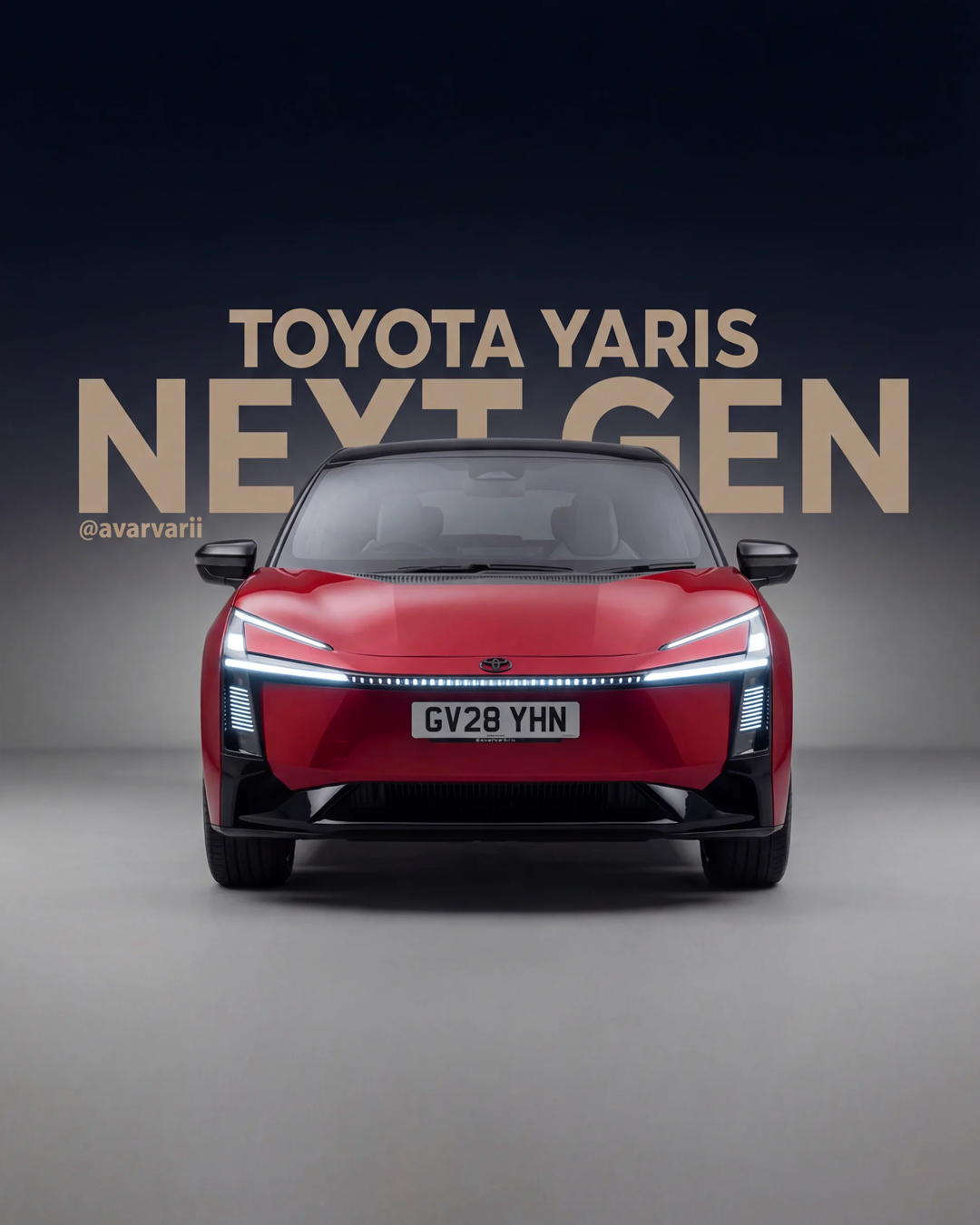
The Toyota Yaris has long been defined by its "cute and curvy" aesthetic—a friendly face in the B-segment hatch market. But if the latest industry rumors are correct, that era is about to end.
I was recently commissioned by Auto Express to visualize the next-generation 2027 Toyota Yaris, and the brief points to a radical shift in design strategy. We are moving away from soft surfaces toward a sharp, digital-first aesthetic that aligns with Toyota’s aggressive new direction.
Before we dive into the design details, check out my exclusive animation above showcasing the new Yaris from every angle.
The "Hammerhead" Face: A New Identity
The most striking update for the 2027 model is the adoption of Toyota’s "Hammerhead" design language. First seen on the new Prius and the C-HR, this styling cue replaces the traditional open grille with a sleek, aerodynamic nose flanked by C-shaped LED daytime running lights (DRLs).
This isn't just about looks; it's about efficiency. As Toyota pushes further into electrification, reducing drag is critical. The new Yaris features a lower hood line, flush door handles, and a wider stance that helps cut through the air more effectively than the current bubble-shaped generation.
One Car, Two Powertrains (Hybrid & EV)
Perhaps the biggest news is Toyota’s "Multi-Path" platform strategy. Unlike other manufacturers that create entirely separate (and often polarizing) designs for their electric cars, Toyota plans to unify the lineup.
Whether you choose the Self-Charging Hybrid or the upcoming All-Electric (EV) variant, the car will look virtually identical. This "unification" strategy suggests that the next Yaris will be built on a highly flexible evolution of the TNGA-B platform, capable of housing batteries or engines without compromising the exterior proportions.
Key Design Highlights
In my illustrations, I focused on three main areas of evolution:
- The Rear: The bulbous taillights of the current model have been replaced by a futuristic, full-width LED light bar that emphasizes the car's width.
- The Profile: We traded organic muscle for architectural lines. The roofline is sleeker, giving the car a "hot hatch" silhouette even in standard trim.
- The Stance: Pushed-out wheels and a longer wheelbase not only improve handling but also create the necessary floor space for the EV battery pack.
Verdict: Cute or Sharp?
This redesign marks a maturing of the Yaris nameplate. It is less "playful city car" and more "sophisticated mobility device." But is it a change for the better?
Read the full exclusive report on Auto Express: https://www.autoexpress.co.uk/toyota/yaris/368976/new-2027-toyota-yaris-get-complete-redesign-it-aims-cater-hybrid-and-ev-buyers
Let me know in the comments on my YouTube channel: Do you prefer the classic curvy Yaris, or are you ready for this sharper, technical future?
