As Porsche transitions the Macan entirely into an all-electric lineup, a glaring strategic challenge has emerged: what happens to the global customer base that still demands internal combustion?
The answer circulating through Stuttgart’s developmental pipeline is the rumored Porsche Octan, an all-new crossover platform engineered to ensure mechanical engagement remains front and center.
At Avarvarii Automotive Art, we have taken the technical intelligence surrounding this program and translated it into a fully realized production preview.
Here is an analytical breakdown of the upcoming vehicle and the design philosophy behind our exclusive concept renders.
The Mission: Navigating the Premium Platform Combustion (PPC)
Unlike the Macan Electric, which rides on the dedicated PPE (Premium Platform Electric) architecture, the Porsche Octan is expected to be anchored to the Volkswagen Group’s sophisticated PPC (Premium Platform Combustion) architecture.
This platform allows Porsche to satisfy stringent global emissions targets without surrendering raw performance. The powertrain lineup is projected to span:
- Entry-Level Variants: A high-output 2.0-liter turbocharged inline-four with a 48V mild-hybrid system.
- Octan S and GTS: A heavily revised 2.9-liter twin-turbocharged V6, integrated with plug-in hybrid architecture to deliver between 450 and 520 horsepower.
- Range-Topping Hybrid: A high-performance PHEV powertrain pushing well past 560 horsepower, bridging the gap between sports car acceleration and practical touring range.
The Octan is not conceived simply as a bridge vehicle; it is designed to stand as a flagship compact-to-midsize ICE offering for enthusiasts unready or unwilling to go fully electric.
Sculpting the Form: The Avarvarii Design Study
Translating the Octan’s mechanical package into bodywork meant abandoning generic crossover bulk in favor of a low-slung, performance-first silhouette.
1. Front Fascia and Aero Channeling
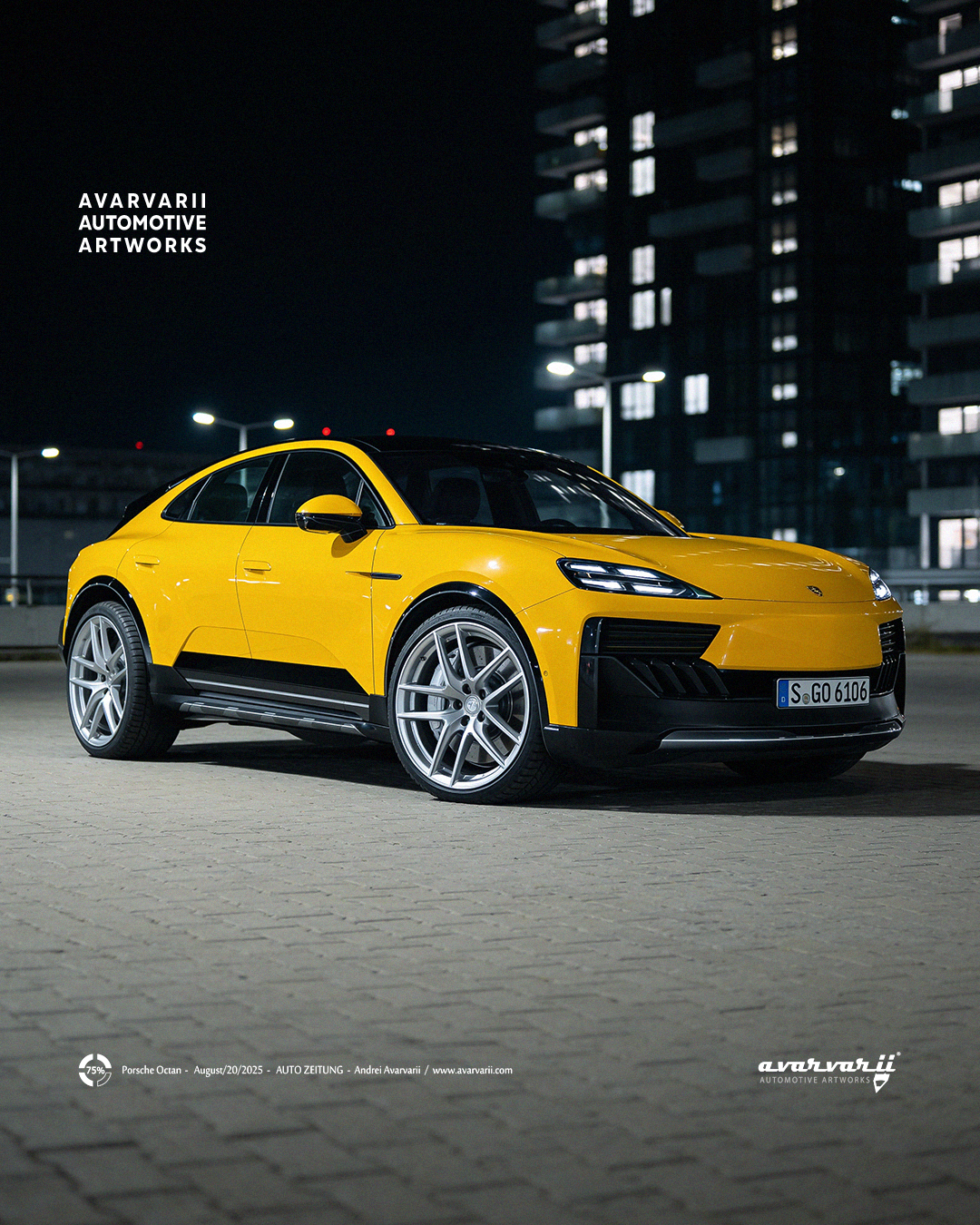
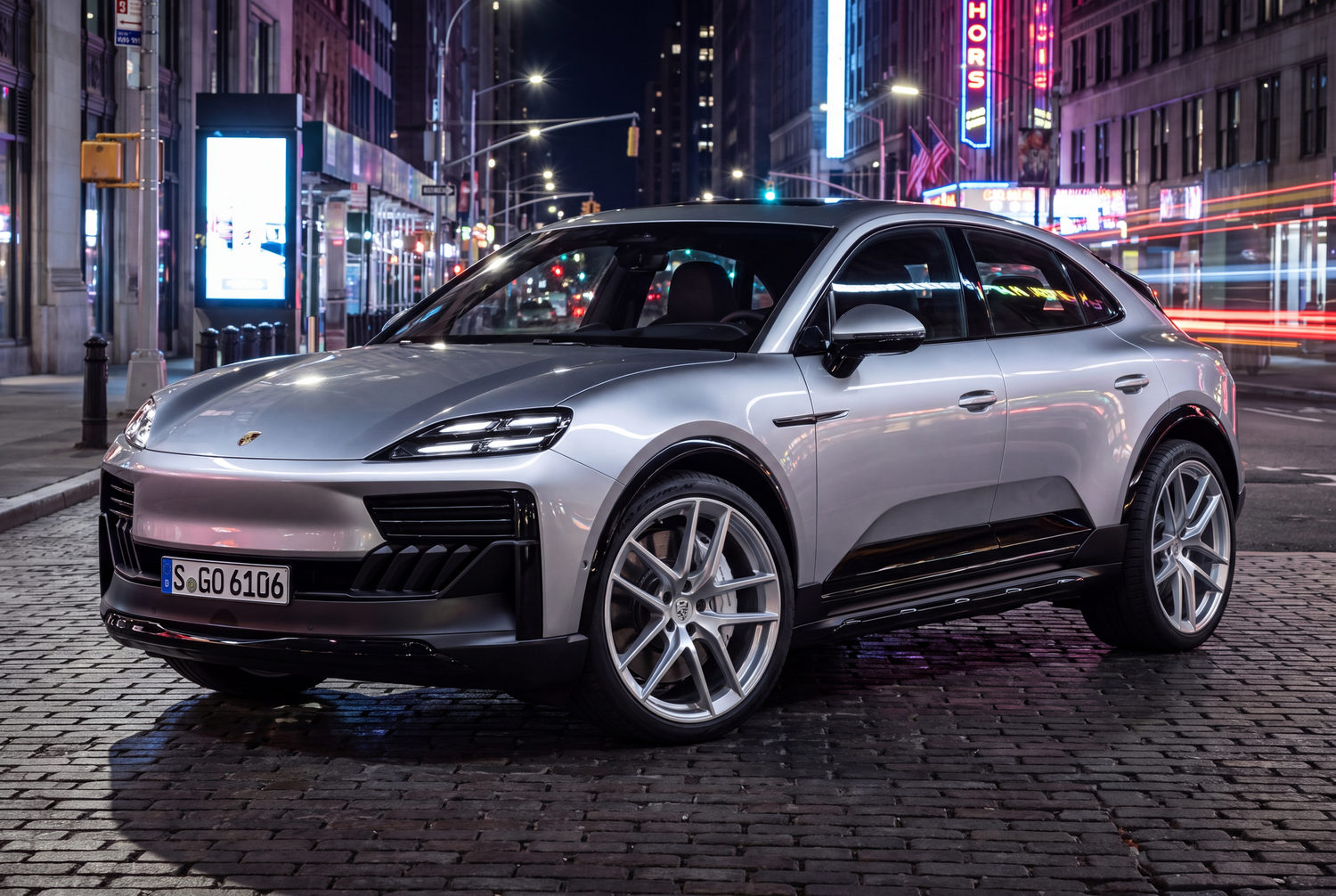
Unlike its electric counterpart, the Octan requires substantial airflow. The front end incorporates enlarged cooling intakes with active aero louvers engineered to cool the twin-turbo V6 and hybrid battery chillers. The headlamp assemblies feature a sharpened evolution of Porsche’s signature four-point matrix lighting, framed by sharply creased fenders that lead down to an aggressive, track-focused lower splitter.
2. Stance and Proportions
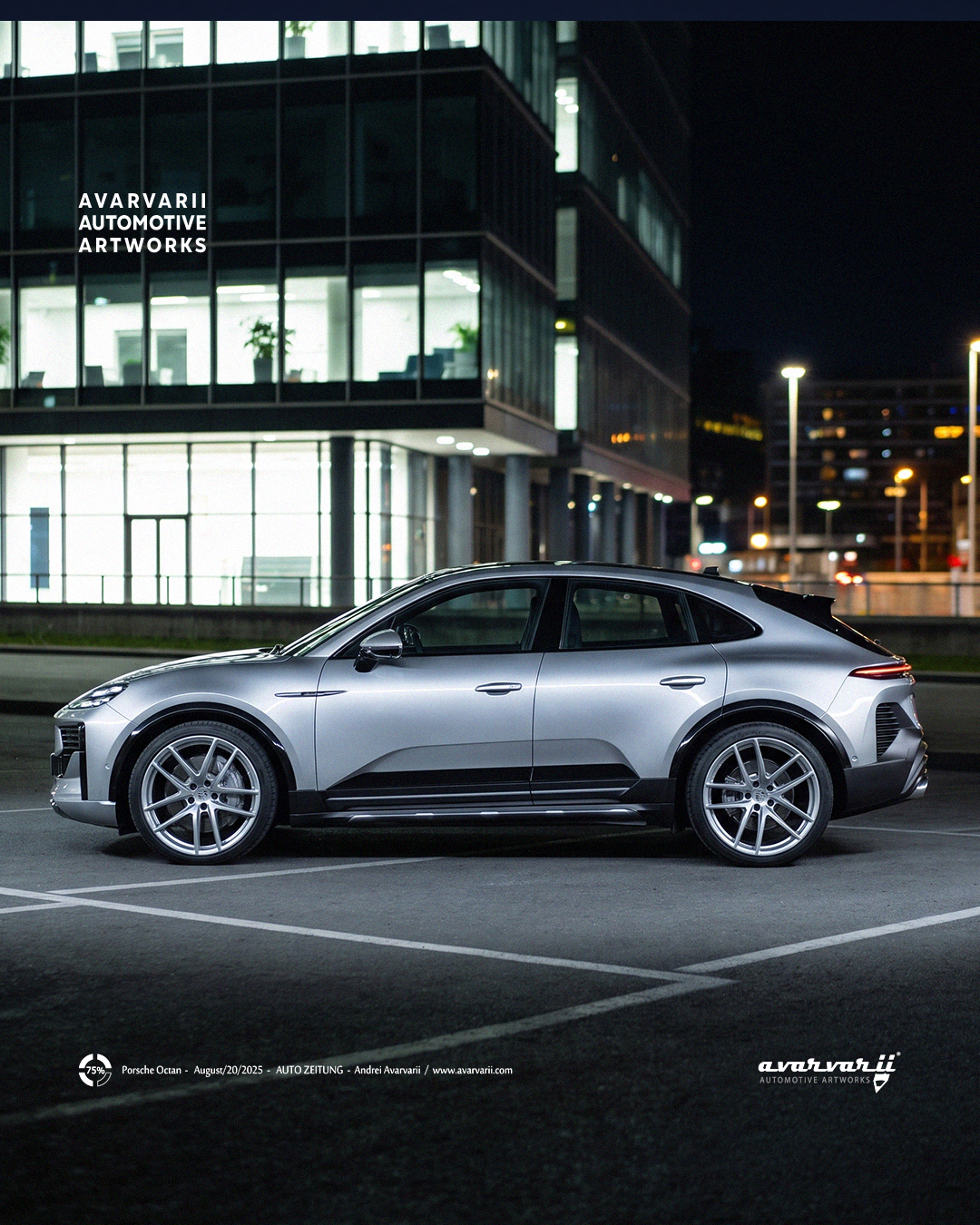
The design leans heavily into sports car proportions. By lowering the roofline and tightening the greenhouse, the profile mimics the silhouette of an elongated 911 rather than an upright utility vehicle. The beltline rises subtly toward the C-pillar, grounding the visual weight over the rear axle.
3. Muscular Rear Haunches
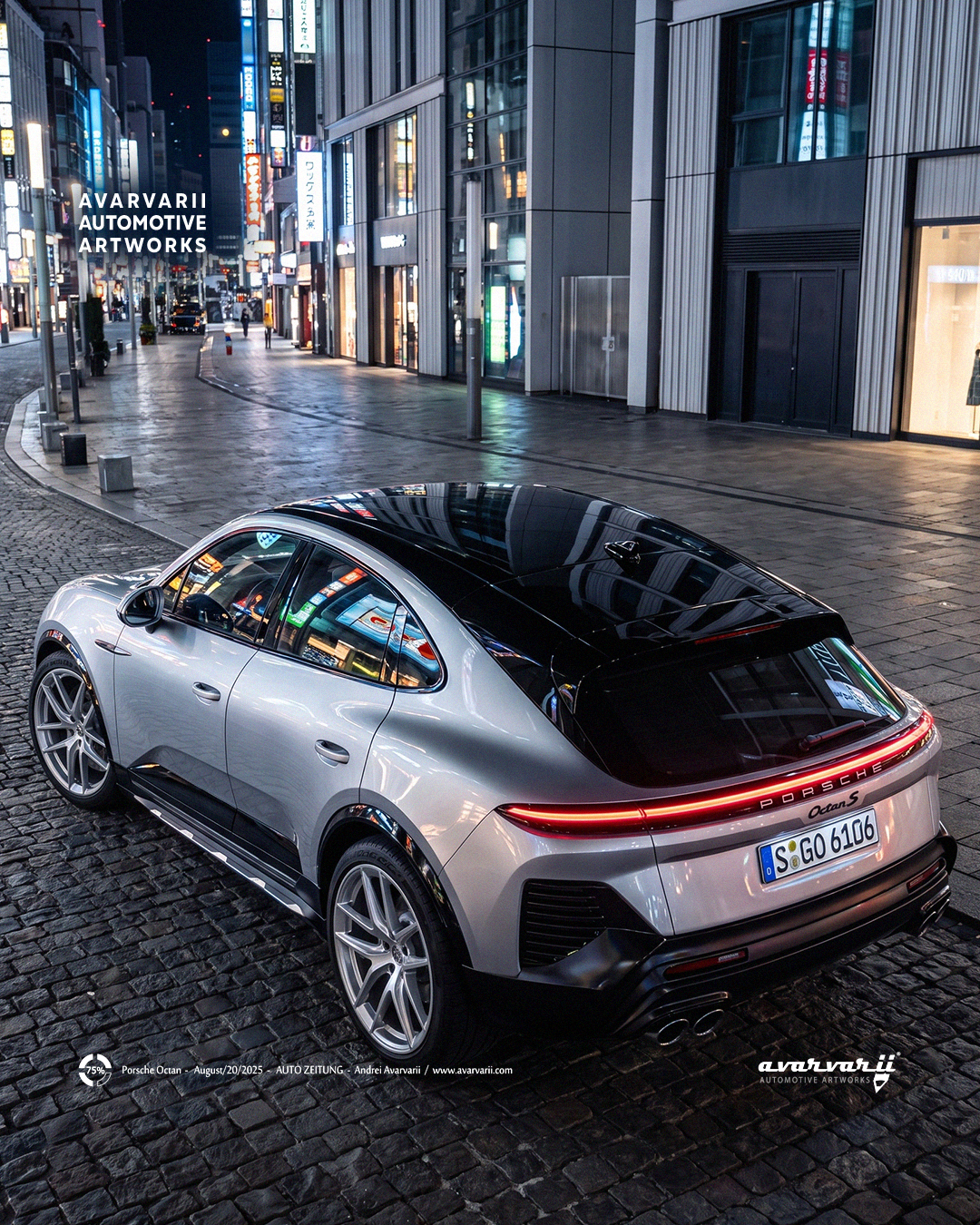
The most defined element of the render lies in the rear three-quarter view. The track width has been visibly expanded, terminating in deep, sculpted haunches that recall modern GT3 design language. Integrated aero diffusers flank active exhaust outlets, reminding onlookers that this vehicle relies on real engine mechanics.
Final Thoughts and Industry Impact
The Porsche Octan represents a crucial pivot point for modern performance marques. It demonstrates that the transition to electrification does not require the immediate extinction of driver-focused combustion machinery.
If our design study reflects the direction you want to see Stuttgart take with real-world production, consider sharing this article across your favorite automotive forums and social channels. Your readership and shares directly support our independent studio in conceptualizing and rendering future automotive programs. Let us know your thoughts on Instagram.
If you found this design analysis insightful, please share this post. Sharing directly supports our studio and allows us to keep bringing you exclusive automotive artwork and future car intel.