When tasked with visualizing the highly anticipated 2029 Dodge Copperhead for Car and Driver, the goal was clear: bring an American apex predator to life.
Positioned as the ultimate flagship for the revitalized SRT brand, this project wasn't about drawing just another sports coupe. The Copperhead is expected to be a true hyper-muscle car—a machine that bridges the gap between traditional American brute force and exotic track-day aerodynamics.
Translating this speculative concept into a tangible design required balancing Dodge's storied muscular heritage with a forward-looking, high-tech aerodynamic philosophy. The result is a vehicle that looks undeniably modern while hinting at the raw, untamed spirit of its predecessors.
Sculpting the Front: Airflow and Aggression
The foundation of the Copperhead’s visual identity begins with its proportions. I designed the body to sit exceptionally low and long, presenting a sleek, low-slung two-door profile that looks far more extreme than anything currently in the Stellantis lineup.
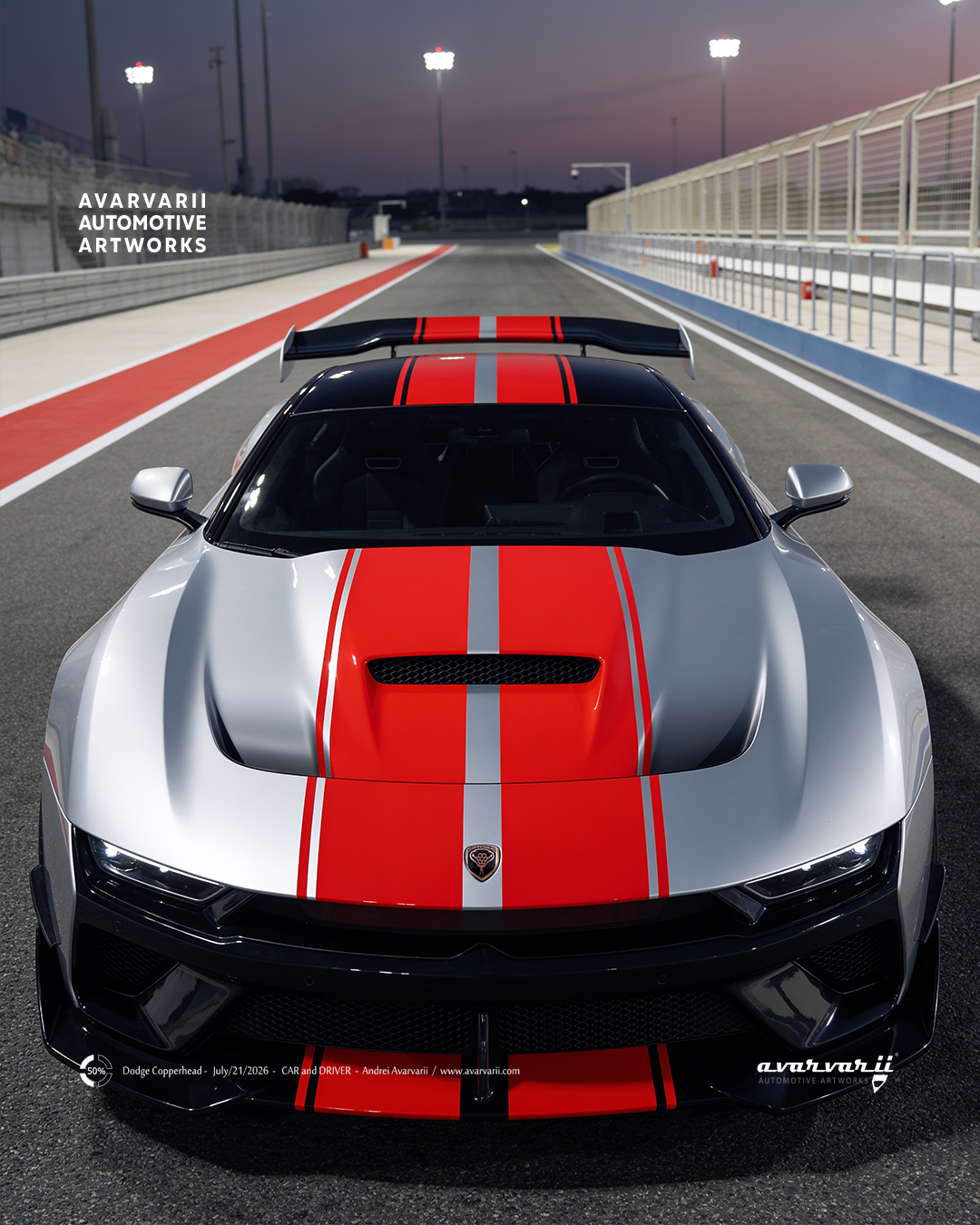
The front fascia is entirely dominated by functional cooling elements. I gave the front end a heavily vented aesthetic, integrating razor-sharp, slim LED headlights deeply nestled into darkened recesses. This creates a predatory scowl, but it also serves a conceptual engineering purpose. The hood itself became an exploration in extreme airflow management. I drew a massive S-duct cutting directly into the sheet metal to channel air efficiently through the front grille and seamlessly over the cabin roofline. To further suggest the presence of a monstrous powerplant underneath, I complemented this duct with a secondary hood vent and a pronounced center bulge.
Profile and Proportions: A Track-Focused Stance
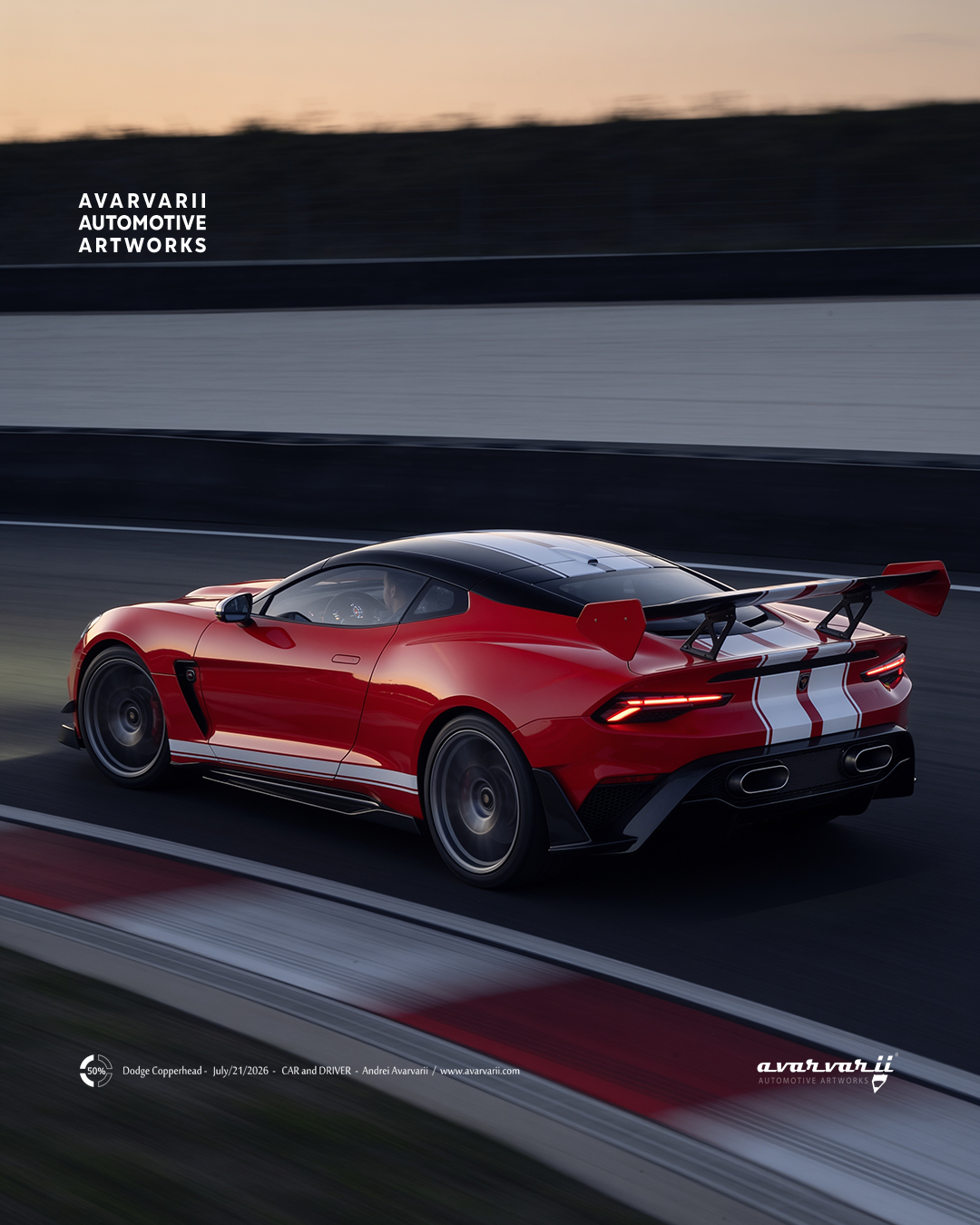
Moving down the deeply sculpted flanks, the design language remains focused on track performance. I positioned aggressive extraction vents just behind the front wheels to imply heavy-duty brake cooling, visually reinforcing the vehicle's track-day intentions. The long hood and pushed-back cabin create a classic rear-wheel-drive proportion, while the tight greenhouse ensures the car visually hugs the tarmac. Every crease and character line along the side profile was drawn to lead the eye rearward, building visual weight toward the rear axle where the power meets the pavement.
The Rear View: Honoring a Legacy
At the rear, the design intentionally channels the spirit of the legendary Viper ACR. The most prominent feature is the imposing, oversized rear wing, styled specifically to suggest immense downforce and keep the car planted at triple-digit speeds.
While official powertrains remain fiercely guarded by Stellantis, I deliberately incorporated a prominently centered, massive exhaust configuration into the illustration. This was a conscious artistic choice to envision the car with a high-output, gas-burning V8, cementing its visual status as an unapologetic, visceral machine ready to push well into premium performance territory. Paired with a wide, aggressive rear diffuser, this setup creates a menacing stance that commands immediate attention from any angle.
Anchoring the entire aesthetic is a striking new snake logo that pays homage to the classic Viper badge. It serves as the perfect finishing detail for an illustration of a machine designed not just to compete, but to utterly terrify the competition.
Read the full story on CAR and DRIVER.