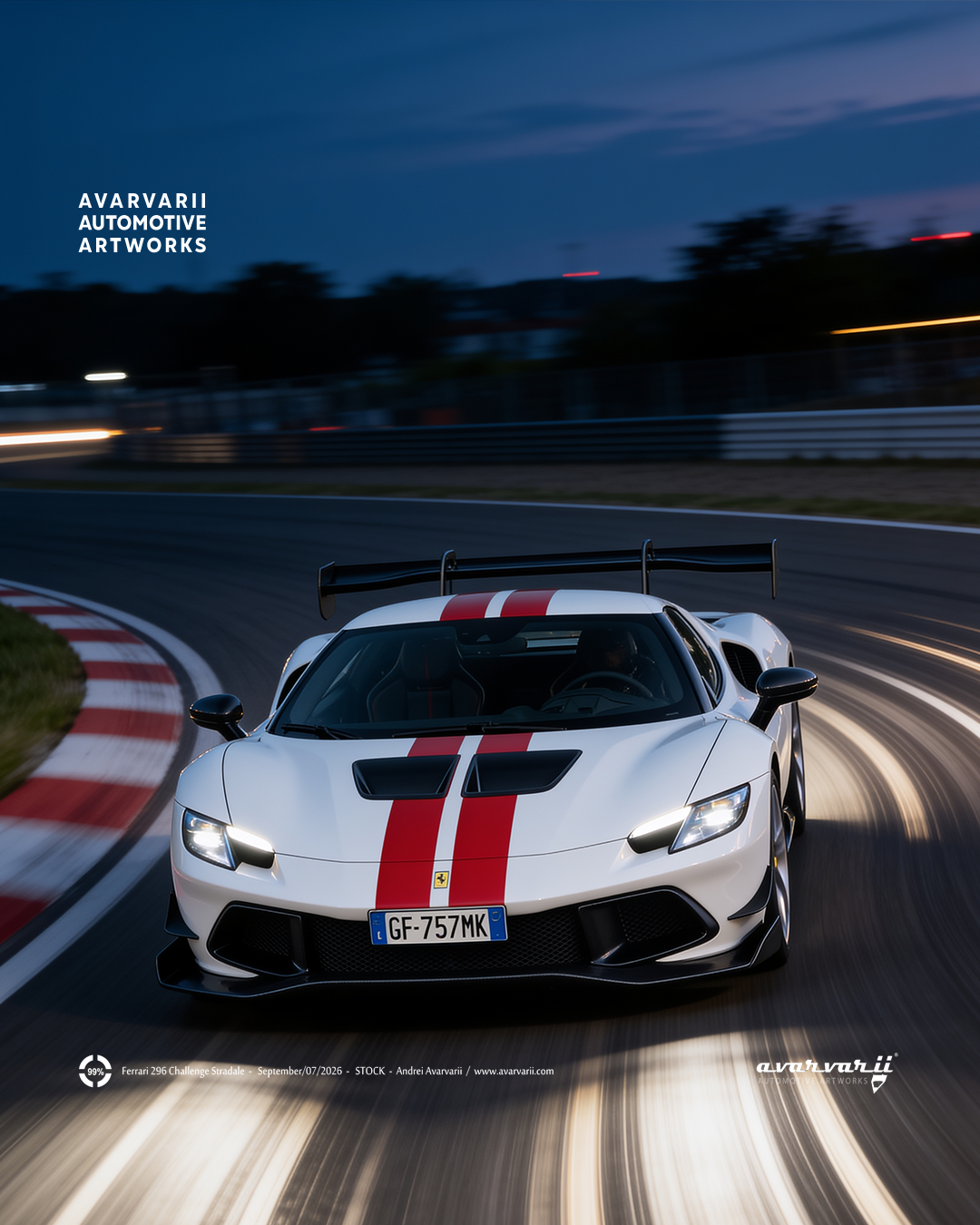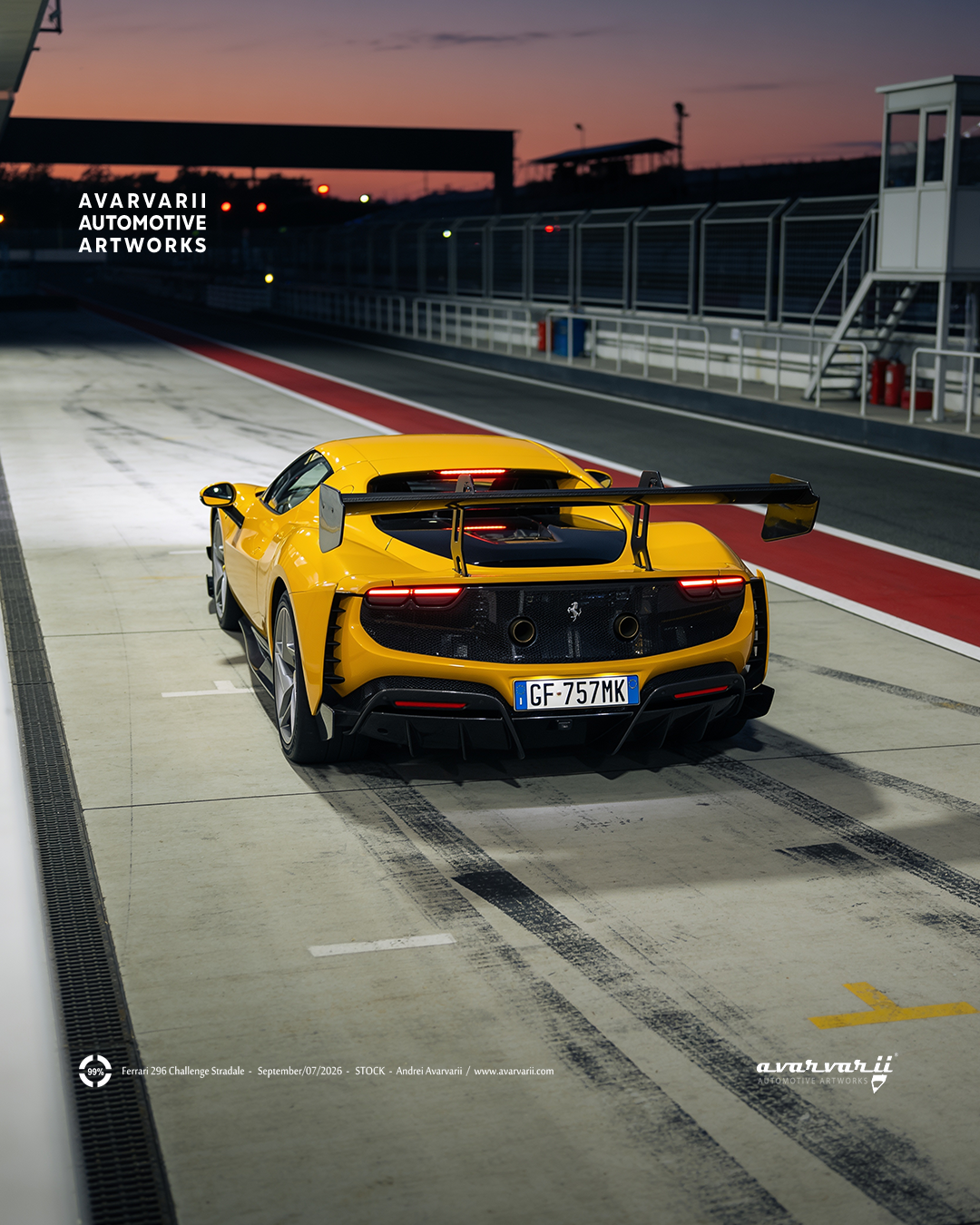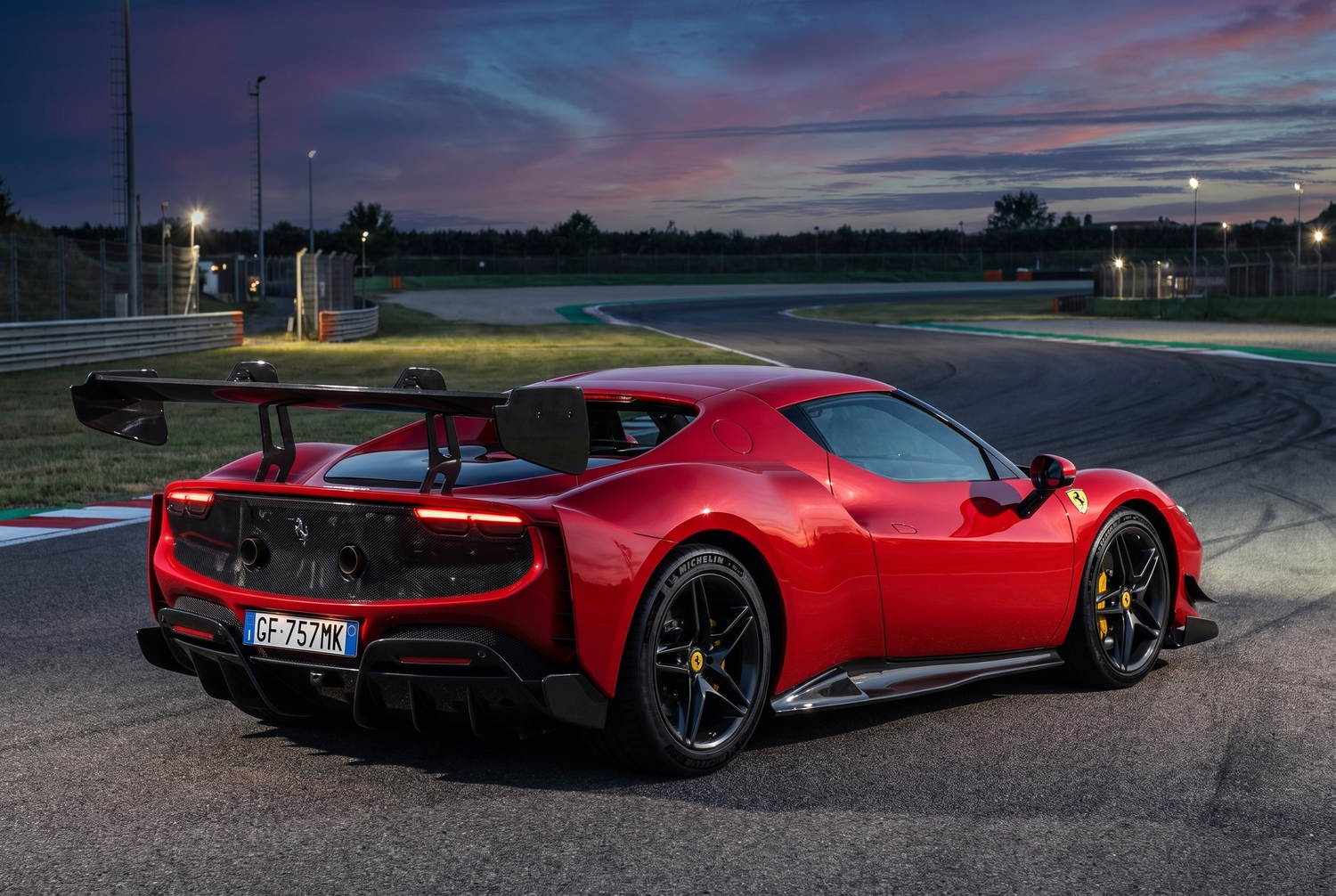
The camouflage has finally been stripped away to reveal the raw, track-focused aggression of the upcoming Ferrari 296 Challenge Stradale.
Through careful analysis of recent test mules, our latest series of illustrations pieces together the aerodynamic puzzle hidden beneath Maranello’s dizzying wraps, showcasing the evolution from a masked prototype to a full-fledged road racer. The transformation is unmistakable as the chaotic test wrap gives way to menacing, purposeful lines, highlighting exactly how far Ferrari has pushed the visual and aerodynamic boundaries for this highly anticipated model.
Engineered for the Circuit: Powertrain and Performance
Beneath this sculpted exterior lies a vastly upgraded powertrain engineered to dominate the circuit. The familiar 3.0-liter twin-turbo V6 plug-in hybrid architecture is expected to receive a substantial boost, pushing combined output toward a staggering 880 horsepower. True to the Stradale and Speciale lineage, this model will undergo a strict diet, shedding excess weight through the extensive use of carbon fiber, titanium engine internals, and stripped-back interior elements. By reducing unsprung mass and dialing in a track-calibrated suspension setup, the resulting power-to-weight ratio guarantees explosive acceleration and razor-sharp handling that bridges the gap between the standard GTB and Ferrari’s dedicated Challenge race cars.
Sculpted by the Wind: Radical Front Aerodynamics
The true theater of the Challenge Stradale, however, is its uncompromising aerodynamic design. Looking down at the dramatically sculpted nose, the heavily vented hood immediately demands attention. These deep extractors are designed to pull hot air from the radiators efficiently while actively pressing the front axle into the tarmac. This downforce generation is further amplified by a completely reworked front fascia featuring an extended, aggressive front splitter flanked by prominent aerodynamic canards and redesigned air ducts, effectively eliminating front-end lift at triple-digit speeds.
Functional Motorsport Art: The Rear Profile
Moving toward the tail, the design becomes purely functional motorsport art. A towering swan-neck rear wing dominates the vehicle's profile, providing a massive aerodynamic anchor for high-speed cornering. This element works in harmony with a heavily revised, deeply channeled carbon fiber rear diffuser and sculpted side aero fins. Together, they manage the aerodynamic wake, optimize outwash, and extract underbody air to glue the rear tires to the track. Every vent, crease, and winglet has been purposefully reshaped from the standard car, resulting in a hyper-focused machine where beautiful form ruthlessly follows aerodynamic function.